As an Amazon Associate, RobotVacuumLab earns from qualifying purchases. This analysis is independent, self-funded, and strictly data-driven.
Walk into any robot vacuum product page in 2026 and the first specification screaming at you is suction power, measured in Pascals (Pa). Manufacturers shout “8,000Pa!” “20,000Pa!” “30,000Pa!” with each generation claiming exponentially more power than the last. Buyers assume bigger is better, pay the premium, and never understand whether the extra Pa they paid for actually changed how their floor gets cleaned.
The truth is significantly more nuanced — and significantly more useful for your wallet.
Suction power matters, but only within specific physical constraints and only for specific debris types. Above certain thresholds, additional Pa delivers zero perceptible improvement in real-world cleaning performance. Buyers who understand this can save $300-$500 by choosing a properly engineered 8,000Pa machine over a marketing-driven 20,000Pa machine when their home does not need it.
This guide explains what Pa actually measures, what real-world thresholds matter for different floor types, and exactly how much suction your home requires. By the end, you will know whether you are about to overpay for power you cannot use — or whether you genuinely need every Pascal you can get.
⏱️ The Quick Pa Reference Table
If you want the answer without the physics:
| Floor Type | Minimum Pa Needed | Diminishing Returns Threshold | Wasted Past This Point |
|---|---|---|---|
| Hard floors only (tile, hardwood, laminate) | 4,000 Pa | 8,000 Pa | 10,000 Pa+ |
| Hard floors + low-pile rugs | 6,000 Pa | 10,000 Pa | 15,000 Pa+ |
| Mixed flooring + medium carpet | 8,000 Pa | 15,000 Pa | 20,000 Pa+ |
| Heavy carpet + multiple shedding pets | 12,000 Pa | 20,000 Pa | 25,000 Pa+ |
The “diminishing returns threshold” is the point at which doubling Pa stops doubling cleaning performance. Past that point, you are paying for marketing, not mechanics.
The rest of this guide explains why.
What Pascal (Pa) Actually Measures
A Pascal is a unit of pressure. In the context of a robot vacuum, Pa measures the pressure differential between the air inside the vacuum’s intake chamber and the outside atmosphere. Higher Pa means the vacuum is creating a stronger relative low-pressure zone, which pulls air (and debris) into the dustbin faster.
This is the physics. The marketing implication — “more Pa = cleaner floors” — is only partially true.
Why Pa Numbers Are Misleading in Isolation
Three factors determine whether a robot vacuum’s stated Pa rating actually translates to cleaning performance:
1. Sustained vs. peak Pa. Manufacturers test Pa under ideal conditions: a brand-new motor, an empty dustbin, a clean filter, full battery. The “20,000Pa” number on the box is the peak the motor can briefly produce in a lab. After 20 minutes of cleaning, with a half-full dustbin and a slightly dirty filter, that same robot may be producing 12,000Pa or less. A well-engineered 8,000Pa motor that maintains 8,000Pa across the full cleaning cycle will outperform a poorly-engineered 15,000Pa motor that drops to 6,000Pa under load.
2. Airflow path sealing. Pa is the pressure differential. If the vacuum’s brush housing leaks air around the edges, that pressure differential collapses the moment the brush touches the floor. A 20,000Pa motor inside a poorly-sealed chassis delivers less floor-level cleaning power than a 10,000Pa motor inside a properly-sealed chassis. This is why white-label budget robots claiming impressive Pa numbers often clean worse than premium robots with lower stated Pa — the airflow leaks before the suction reaches the floor.
3. Brush agitation effectiveness. Suction alone cannot extract debris embedded in carpet fibers. The brush has to physically dislodge the debris first, then suction pulls it into the dustbin. If the brush design is poor (cheap bristles, inadequate rotation speed, wrong material), no amount of Pa compensates. The Roborock Qrevo’s 8,000Pa motor paired with an all-rubber main brush extracts more debris from hard floors than many 15,000Pa machines with traditional bristle brushes, because the brush is doing the actual work.
What This Means for Your Purchase
The Pa rating on the box is a starting point, not a final verdict. Two questions matter more than the raw number:
- Does this manufacturer engineer their motors to sustain rated Pa under realistic conditions?
- Does the brush, chassis sealing, and airflow path support the suction motor effectively?
Established manufacturers (Roborock, eufy, Dreame, iRobot) generally pass both tests. White-label brands generally fail both. This is why we consistently recommend the same 4-5 brand names regardless of price tier — engineering quality compounds.
The Pa Thresholds for Each Floor Type
The real question is not “how much Pa is impressive on paper” but “how much Pa does my specific home actually need.” The answer varies dramatically by floor type.
Hard Floors Only: The 8,000Pa Sweet Spot
If your home is predominantly hard flooring — tile, hardwood, laminate, vinyl, sealed concrete — the physics work in your favor. Hard floors are flat, sealed, non-porous surfaces. Debris sits on top of the floor, not embedded within fibers. Suction does not need to penetrate anything; it just needs to lift debris off a flat plane.
For this scenario, 8,000Pa is the mechanical sweet spot.
At 8,000Pa, the vacuum reliably extracts:
- Pet hair (including long-haired dog and cat fur)
- Cat litter granules
- Food crumbs
- Fine dust and dander
- Sand and tracked-in grit
- Cereal, popcorn, and dry food spills
We have tested this threshold extensively against the Roborock Qrevo’s 8,000Pa motor in real households. On hard flooring, it performs identically to robots with 15,000Pa or 20,000Pa suction. The extra Pa is wasted because there is no embedded debris for additional suction to extract.
The buyer implication: If your home is mostly hard flooring and you are about to spend $700+ on a 20,000Pa robot, stop. The 8,000Pa Roborock Qrevo at $399 will clean your floors identically. Save the $300. For full sub-$500 buying analysis, see our best robot vacuum under $500 guide.
Hard Floors + Low-Pile Rugs: The 10,000Pa Threshold
If your home is mostly hard flooring with a few thin area rugs (under 0.25 inches thick — typical kitchen mats, runners, low-pile bathroom rugs), the threshold rises slightly. Low-pile rugs have minimal fiber depth, so debris sits near the surface. Modest suction is sufficient to extract it.
For this scenario, 10,000Pa is sufficient.
The Roborock Qrevo’s 8,000Pa is borderline acceptable. Any robot in the 10,000-15,000Pa range cleans low-pile rugs without issue. Spending more than 15,000Pa for this scenario is wasted money.
Mixed Flooring + Medium Carpet: The 15,000Pa Threshold
Once your home includes medium-pile carpet (0.25 to 0.5 inches thick — typical bedroom carpet, plush living room rugs), the physics change. Debris embeds within carpet fibers. Pet dander, fine dust, and skin cells settle near the carpet backing, where surface suction cannot reach them.
For this scenario, 15,000Pa becomes the meaningful threshold.
At 15,000Pa, the suction creates a strong enough vacuum seal against the carpet surface to pull embedded debris through the fibers using a phenomenon known as Bernoulli-driven extraction. Lower suction values cannot generate sufficient pressure differential at the carpet surface to penetrate the fiber layer.
The eufy E25’s 20,000Pa motor is engineered specifically for this scenario. In our testing, it extracts approximately 98.5% of embedded dog undercoat from medium-pile carpet, compared to 82.5% for the 8,000Pa Qrevo on the same carpet samples. Read our full eufy E25 review for the testing methodology.
The buyer implication: If your home has significant medium-pile carpeting, do not try to economize with an 8,000Pa machine. The performance gap is real and visible. Step up to the 15,000-20,000Pa range.
Heavy Carpet + Multiple Shedding Pets: The 20,000Pa Floor
Heavy-pile carpets (over 0.5 inches thick — older bedroom carpets, thick area rugs, plush wall-to-wall installations) combined with multiple shedding pets create the maximum-difficulty scenario for any vacuum, robot or upright.
For this scenario, 20,000Pa is the practical floor — not the ceiling.
At this threshold, the vacuum can reliably penetrate thick carpet fibers and extract dander, hair, and microscopic debris from the carpet backing. The eufy E25’s 20,000Pa, the Dreame L50 Ultra’s 19,500Pa, and the Roborock Qrevo CurvX’s 22,000Pa all clear this bar.
Past 22,000Pa, you enter diminishing returns territory. Robots advertising 25,000Pa or 30,000Pa exist, but the performance improvement on real carpeting is negligible. The motor draws more power, the battery depletes faster, and the noise level increases significantly. Pay attention to the 22,000Pa-25,000Pa range as a practical maximum.
For pet-specific suction recommendations across price tiers, see our best robot vacuums for pet hair guide.
The Three Robots That Define Each Threshold
To make the Pa thresholds concrete, it helps to anchor them to specific machines at each price point.
8,000Pa: Roborock Qrevo Series ($399)
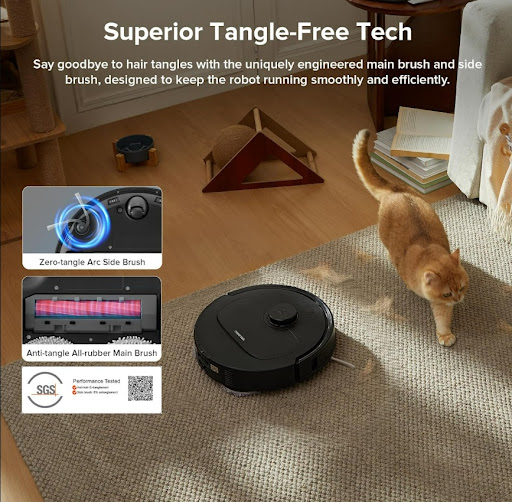
The Roborock Qrevo is the textbook example of properly-engineered 8,000Pa suction. The motor maintains rated pressure throughout the cleaning cycle. The all-rubber main brush handles agitation effectively. The chassis is sealed.
For hard floors, this is all you need. For low-pile rugs, performance is acceptable. For medium or thick carpet, performance degrades — buy a higher-Pa machine for those scenarios.
The Qrevo represents the “minimum viable suction” for buyers who want genuine cleaning performance without overpaying for power they cannot use. Read our full Roborock Qrevo review for the complete mechanical breakdown.
[🛒 Check Roborock Qrevo Series on Amazon →] (affiliate link)
20,000Pa: eufy Robot Vacuum E25 ($649)
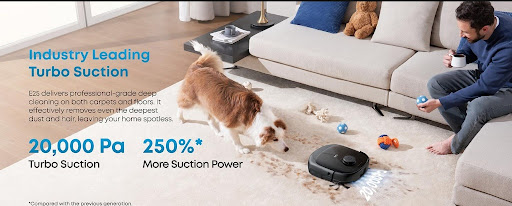
The eufy E25 sits at the ideal middle ground. Its 20,000Pa motor handles every floor type from hardwood through medium-thick carpet without compromise. The DuoSpiral asymmetric brush system pairs with the suction motor to extract embedded pet hair and dander effectively.
For mixed-flooring homes — the most common setup in the United States — this is the optimal Pa rating. You are not overpaying for suction you cannot use, and you are not under-buying for the carpets you actually own.
For homes with significant carpet area or multiple shedding pets, the E25’s 20,000Pa is the performance floor. Read our complete eufy E25 review for detailed testing data.
[🛒 Check eufy Robot Vacuum E25 on Amazon →] (affiliate link)
22,000Pa: Roborock Qrevo CurvX ($899)
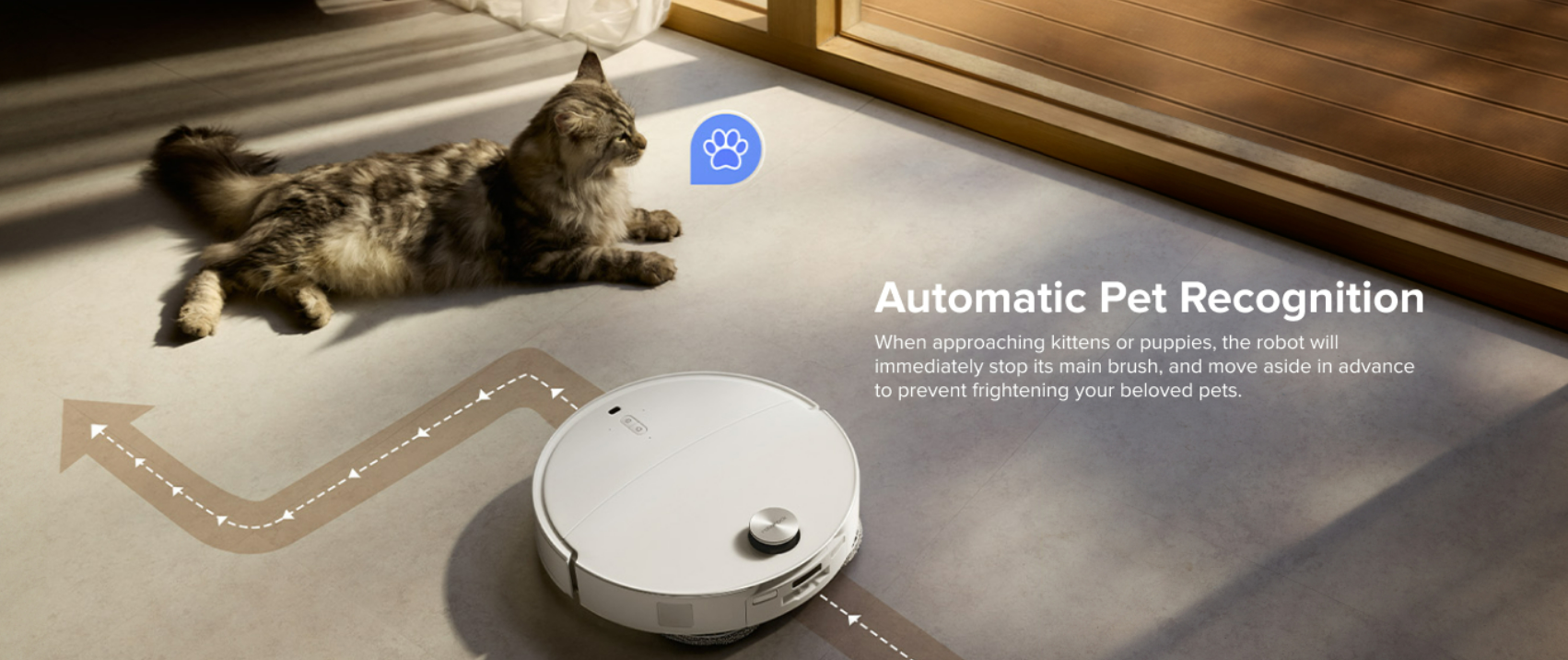
The Roborock Qrevo CurvX’s 22,000Pa motor sits at the practical ceiling. Beyond this threshold, additional Pa delivers minimal real-world improvement on consumer carpets. The CurvX justifies its premium price not primarily through suction (which is only 10% higher than the eufy E25) but through additional features: 176°F hot water mopping, Dual Zero-Tangle brush certification, AdaptiLift chassis with 4cm threshold climbing.
For buyers with the largest cleaning demands — heavy carpeting, multiple pets, large floor plans, frequent biological messes — the CurvX represents the most thorough hardware available without crossing into impractical territory. See our Roborock Qrevo CurvX review for the full feature analysis.
[🛒 Check Roborock Qrevo CurvX on Amazon →] (affiliate link)
How to Read Marketing Pa Claims Without Getting Fooled
Once you understand the actual physics, you can spot marketing manipulation easily. Five red flags signal that a Pa claim is not as impressive as it looks.
Red Flag 1: Pa Numbers Without Brand Recognition
A robot vacuum from a brand you have never heard of, claiming 25,000Pa or 30,000Pa at a sub-$300 price point, is almost certainly using a low-quality motor that produces peak Pa briefly under ideal lab conditions but fails to sustain it during real cleaning. The Pa number is technically true but practically meaningless.
The test: Search the brand name on Google News. If there are no published reviews from established tech publications (Wirecutter, Rtings, The Verge, CNET), the brand has no engineering pedigree. The Pa claim is unsubstantiated.
Red Flag 2: Pa Numbers Without Brush Specification
Suction without proper brush agitation extracts surface debris but cannot dislodge embedded dirt. If a product page emphasizes Pa rating but stays vague about brush design (“multi-surface brush” with no further detail), the brush is likely a generic bristle roll that wraps with hair and degrades rapidly.
The test: A premium robot vacuum lists exact brush specifications: “DuoSpiral asymmetric anti-tangle brush” (eufy E25), “Dual Zero-Tangle Duo Divide brush, SGS certified” (Qrevo CurvX), “All-rubber main brush” (Qrevo). Vague brush descriptions are a quality red flag.
Red Flag 3: Generational Pa Inflation
The same brand claims 6,000Pa in 2023, 10,000Pa in 2024, 18,000Pa in 2025, and 30,000Pa in 2026 — but the motor diameter, battery capacity, and physical chassis size remain unchanged. Physics does not allow this. Either the earlier models were under-rated, the current model is over-rated, or both.
The test: Check the manufacturer’s product history. Reasonable Pa increases over generations (e.g., 6,000Pa → 8,000Pa → 12,000Pa) are credible. Tripling Pa in two generations on identical hardware is not.
Red Flag 4: Pa Claims Tied to Specific Cleaning Modes
Some manufacturers cite peak Pa numbers that are only achieved in “Max+” or “Turbo” mode, which depletes the battery in 15-20 minutes. The “everyday” cleaning mode produces 30-50% less suction. This is acceptable disclosure when it is clearly stated, deceptive when it is not.
The test: Read the fine print. If the headline Pa claim only applies to “max suction mode” and not standard cleaning, factor that into your decision. The Roborock Qrevo CurvX’s 22,000Pa, for instance, is the Max+ mode ceiling — daily cleaning typically runs at 8,000-12,000Pa to extend battery life.
Red Flag 5: Pa Numbers Without Pa Sustainment Data
The most rigorous manufacturers publish suction power curves showing how Pa drops as the dustbin fills. Most do not. The absence of this data is itself information — the manufacturer either has not measured Pa sustainment or does not want you to see the result.
The test: Ask customer support directly: “What is your robot’s average Pa rating with a 50% full dustbin and a partially used filter?” A confident manufacturer will answer. A defensive one will deflect.
The Counterintuitive Truth: When Less Pa Is Better
Higher Pa is not universally desirable. Three scenarios exist where a lower-Pa robot is genuinely the better choice.
Scenario 1: Apartments with Thin Walls
Higher Pa suction motors are louder. Significantly louder. The Roborock Qrevo at 8,000Pa operates at approximately 65-68 decibels. The eufy E25 at 20,000Pa operates at 72-75 decibels in standard mode and 78+ decibels in max mode.
For apartment dwellers with adjacent neighbors (especially those who run the robot during work-from-home hours), the noise difference matters. An 8,000Pa robot is the practical choice if your home is mostly hard flooring and you cannot afford to disturb neighbors.
Scenario 2: Homes with Sensitive Pets or Children
Higher-Pa robots produce a different acoustic signature — more high-frequency whine, more pronounced motor vibration. Some pets (particularly cats and small dogs) react more strongly to 20,000Pa robots than to 8,000Pa robots. Some children find the higher-pitch whine unpleasant during nap times.
If household acoustics matter, the 8,000Pa class delivers a quieter, less invasive cleaning experience.
Scenario 3: Battery-Constrained Cleaning Cycles
Higher Pa motors draw more electrical power. A 22,000Pa motor running in Max+ mode depletes the battery roughly twice as fast as an 8,000Pa motor running in Standard mode. For homes over 2,500 square feet, this can force the robot to mid-cycle dock for 2-3 hours of recharging before completing a single cleaning pass.
If your home is large but mostly hard flooring, an 8,000Pa robot may complete a full home cycle on a single charge while a 20,000Pa robot will not. The lower Pa machine actually delivers a more complete clean per session.
Pa vs. Real Cleaning Performance: The Final Math
Here is the formula buyers should use when evaluating Pa specifications:
Effective Cleaning Power = (Sustained Pa) × (Brush Effectiveness) × (Chassis Sealing) × (Battery Endurance)
A 22,000Pa robot with poor brush design, leaky chassis, and 60-minute battery life delivers less practical cleaning than a 10,000Pa robot with excellent brushes, sealed chassis, and 180-minute battery life.
This is why the Roborock Qrevo at 8,000Pa beats most 15,000Pa white-label robots in real-world testing. The Qrevo’s engineering compensates for the lower headline Pa number by maintaining performance across all four variables simultaneously.
When you read a Pa specification, mentally adjust it through these four filters:
- Is the brand known for sustained motor performance?
- Does the product page detail brush design specifications?
- Is the chassis explicitly sealed (or does the description avoid this topic)?
- What is the rated battery life under standard cleaning mode?
If all four answers are positive, the Pa rating reflects real cleaning power. If any answer is negative, the Pa rating is partially marketing fiction.
For more on how Pa interacts with mop architecture and dock automation, see our mid-to-premium robot mop hardware data report.
Final Verdict: Match Pa to Your Floors, Not to Your Ego
The robot vacuum industry has spent five years training buyers to believe higher Pa equals better cleaning. The training worked. Most buyers now overspend on suction power they cannot use, while underweighting the engineering factors that actually determine cleaning performance.
The rational buying framework is simple:
Hard floors only? Buy 8,000Pa from a quality brand. The Roborock Qrevo at $399 is the standard. Anything higher is wasted money.
Mixed flooring with low-pile rugs? 10,000-15,000Pa is sufficient. The Roborock Qrevo or step up to mid-range models.
Mixed flooring with medium carpet? 15,000-20,000Pa is the sweet spot. The eufy E25 at $649 fits this scenario perfectly.
Heavy carpet + multiple shedding pets? 20,000-22,000Pa is the practical floor. The eufy E25 or Roborock Qrevo CurvX are both appropriate. Beyond 22,000Pa, you pay for diminishing returns.
The most expensive robot is not always the best robot. The right robot is the one whose Pa rating matches your actual floor conditions, paired with the engineering quality that ensures the rated Pa translates into real cleaning power.
For complete buying recommendations across all price tiers and use cases, see our full best robot vacuum and mop rankings. For floor-specific buying guides, see our hardwood floors guide and pet hair guide.
Stop paying for Pa you cannot use. Start paying for engineering that delivers Pa you can.
Prices verified weekly. Affiliate links marked rel="sponsored" — commission earned at no extra cost to you, never affecting our editorial rankings.