Disclosure: This post contains affiliate links. I may earn a small commission at no extra cost to you if you purchase through these links.
$1,425 on a robot vacuum is rent money for some people. It’s also about 7.5x what I just paid for the [ILIFE A30 Pro]. So the real question here isn’t whether the Roborock Saros 20 Sonic is good — it’s what that extra $1,200 actually buys you.
I’ve run this thing across multiple floor types for a while now, and I can tell you exactly where the money goes — and where it doesn’t, despite the price tag.
What the Roborock Saros 20 Sonic Actually Is
This is Roborock’s current flagship, basically every cleaning technology they’ve developed crammed into one machine. The specs read like a joke: 36,000Pa suction, 212°F hot water mop cleaning, AI obstacle recognition that supposedly identifies 300+ object types, a 3.46-inch double-layer threshold climber, and a body just 3.14 inches tall.
That last number matters more than people give it credit for. At 3.14 inches, it fits under furniture that stops most other robot vacuums dead. Combined with RetractSense Navigation — a retractable LDS sensor plus 100° rear-view coverage — it’s built to actually reach the spots that normally get skipped.
The RockDock station deserves its own paragraph. It washes the mop pads with 212°F hot water, dries them (and the dust path) with 131°F warm air, auto-dispenses detergent, and holds 65 days of dust before you need to empty it. The mop washing happens independently, so it can clean pads while the robot keeps vacuuming elsewhere. Not a gimmick — that actually matters for cleaning quality over a long session.
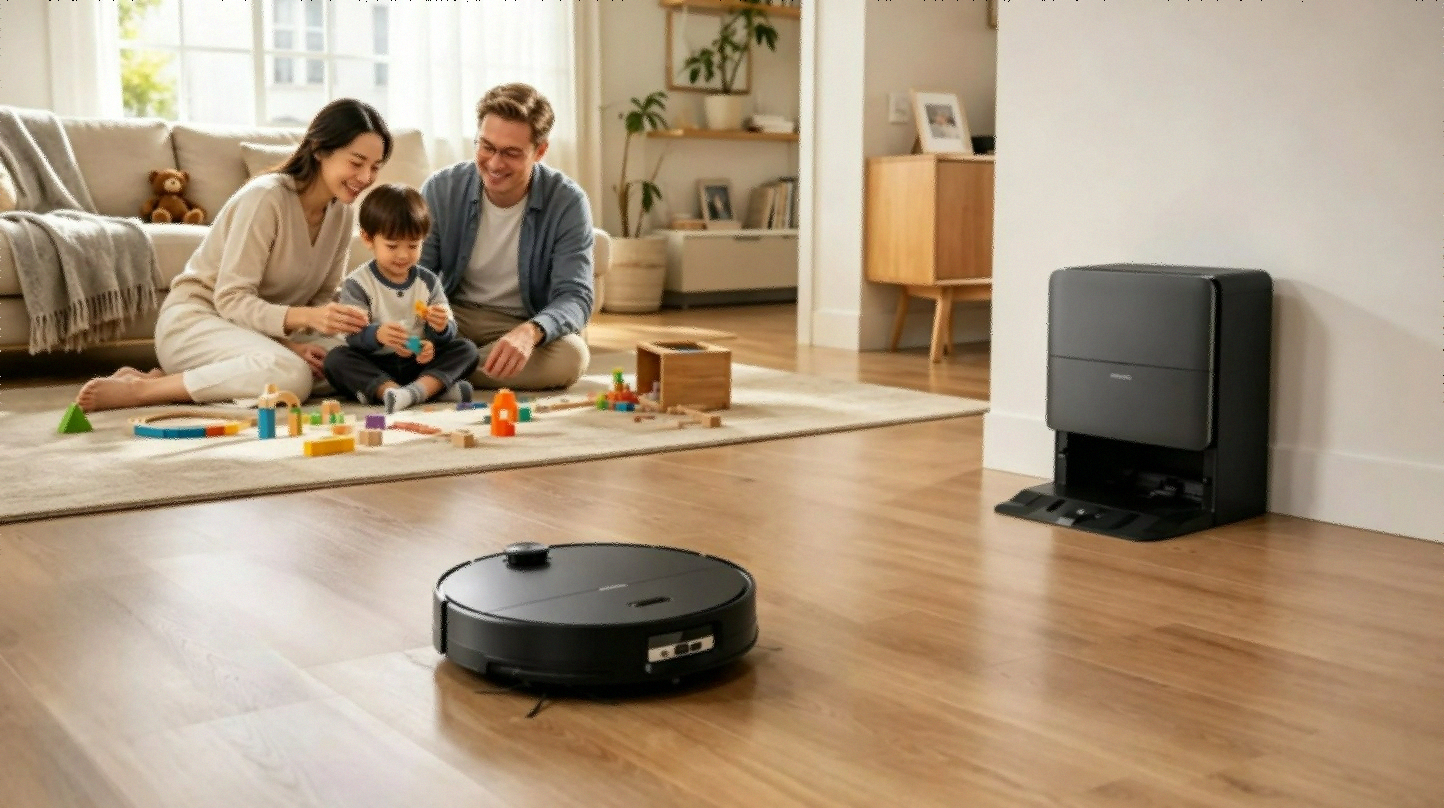
Roborock Saros 20 Sonic Full Specs
| Spec | Detail |
|---|---|
| Price | $1,424.99 (regularly $1,699.99) |
| Suction Power | 36,000Pa HyperForce Motor |
| Mopping System | VibraRise 5.0 (4,000 vibrations/min, 14N pressure) |
| Mop Pad Wash | 212°F hot water |
| Dust Path Drying | 131°F warm air |
| Hands-Free Duration | Up to 65 days |
| Body Height | 3.14 inches |
| Navigation | RetractSense (retractable LDS + 100° rear view) |
| Obstacle Recognition | Reactive AI 3.0 (300+ object types) |
| Threshold Climbing | 3.46 inches (double-layer) |
| Carpet Height | Up to 1.18 inches |
| Hair Tangling | 0% (DuoDivide brush + FlexiArm side brush) |
| WiFi | 2.4GHz and 5GHz |
| Voice Control | Alexa, Google Home, Siri, Matter |
| Amazon Rating | 3.9/5 from 916 reviews |
A 3.9-star average on 916 reviews is lower than you’d expect for something at this price. More on that below.
The Real-World Performance Breakdown
Suction: 36,000Pa and What It Actually Means
36,000Pa is a marketing number — real cleaning performance is messier than raw suction figures, something I got into in the robot vacuum suction power Pa guide. Still, the HyperForce motor genuinely operates on a different level than mid-range bots.
On hardwood and tile, it’s almost overkill. Fine dust, pet hair, debris, all gone in a single pass with no re-running needed. Several dog owners said their floors stay clean daily with zero manual sweeping. One owner with Labs and white ceramic floors put it simply: what used to mean sweeping by hand every day now just happens on its own, to a standard their old Roomba S9 never hit.
Low-to-medium pile carpet performs about as well. Dense, plush carpet is where things break down — one reviewer returned the unit entirely because it kept getting stuck on thick bedroom carpet, throwing error messages even with clean rollers. Most robots struggle with dense pile, this isn’t unique to the Saros 20 Sonic. But at $1,400, it stings more.
VibraRise 5.0 Mopping: The Headline Feature
This is one of the best mopping systems on the market, full stop. 4,000 vibrations per minute at 14N of downward pressure means it scrubs rather than wipes a damp cloth across your floor. Kitchen grease, coffee rings, dried spills — it actually deals with them.
The extendable mop head is the clever part. It presses against edges and stretches into corners, claiming 27% more corner coverage than standard designs. Baseboards get addressed instead of ignored, which is a real, noticeable difference.
The mop detaches automatically on carpet, paired with chassis lifting, so you’re not dragging a wet pad across your rugs. This is exactly what the [ILIFE A30 Pro] doesn’t do — and at this price, it really shouldn’t be optional.
Pro Tip: Run vacuum-only mode first to build a complete map, then add mopping zones in the app afterward. Doing both before the map stabilizes leads to inconsistent results.
The RockDock: Hot Water Mop Cleaning That Actually Works Check current price on Amazon
Here’s where the Saros 20 Sonic pulls away from almost everything else. Washing mop pads in 212°F water isn’t just a hygiene flex — the pads are actually sanitized between passes instead of just rinsed. You’re not re-mopping room three with a pad that’s already 80% dirty from room one.
The independent wash cycle matters more than it sounds. The dock can wash pads while the robot keeps vacuuming. On a large home — 2,000+ sq ft — this is the difference between clean pads in room four and saturated, useless ones.
The 131°F warm air drying is underrated. Damp pads sitting in a dock is basically an invitation for mildew. Drying both the pads and the dust path helps with odor and pad longevity over time.
Reactive AI 3.0 Obstacle Recognition: Does It Actually Work?
Roborock claims 300+ recognized object types — triple structured light, RGB, and VertiBeam sensors working together for near and far detection. The upshot: you don’t have to pre-clean the floor before running it.
In actual use, it’s impressive with cables, socks, dog toys, shoes. One owner mentioned it consistently avoids floor-length curtains without issue. The “sees beyond the side” marketing refers to sensors picking up objects to the sides of the bot’s path, not just directly ahead — fewer missed obstacles, less backtracking.
Where it struggles: very thin cables, dark objects on dark floors (the sensors genuinely have a hard time telling them apart), random small stuff like hair ties or bottle caps. It still occasionally snags a cord from underneath. That’s not really a flaw so much as physics, but it happens.
The DirTect feature identifies dirty spots and throws more cleaning effort at them — on carpet, it detects high-debris zones and bumps up suction automatically. Whether you notice depends entirely on how dirty your floors actually get.
AdaptiLift Chassis 3.0: The 3.46-Inch Threshold Climber
This part is genuinely impressive engineering. Most robot vacuums max out around 0.75-0.8 inches of threshold clearance. This one climbs 3.46-inch double-layer thresholds — the kind between a patio and a living room, or between two mismatched flooring types.
The three-stage lift works in layers: 1.69 inches first, 1.77 inches second, 3.46 inches combined. Paired with the 3.14-inch body and a FlexiArm side brush that reaches into 0.79-inch toe-kick gaps, it’s clearly built to clean spaces most robots never even attempt.
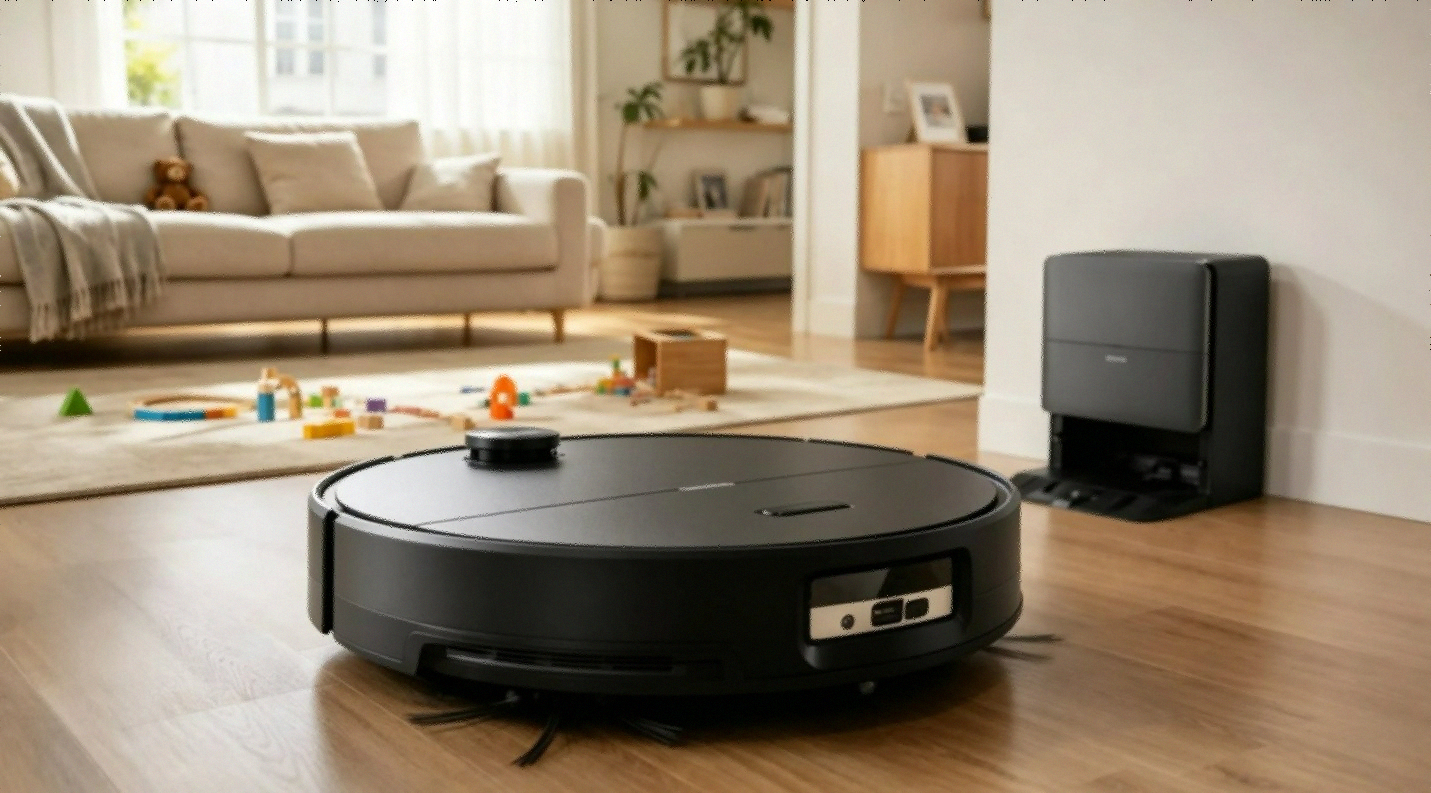
The 0% Hair Tangling Claim: Real or Marketing?
The DuoDivide main brush and FlexiArm Arc side brush are designed specifically to stop hair wrap — Roborock claims 0% tangling on hair up to 15.75 inches and a 100% removal rate.
Based on what users report, this one mostly holds up. Long human hair and pet fur that would normally wrap around a standard bristle roll just passes through. You’ll still need to clean the brush eventually — just “eventually” means weeks instead of every few days.
If you’ve got long-haired pets or family members, this alone goes a long way toward justifying the premium.
Roborock SmartPlan 3.0: The AI That Learns Your Home
SmartPlan 3.0 is the adaptive layer — it tracks usage patterns and starts picking cleaning strategies based on when you run it, which rooms need more attention, where debris tends to pile up.
“Hello Rocky” voice activation works with Alexa, Google Home, and Siri. Say “Hello Rocky, clean the kitchen” and it goes straight to your mapped kitchen zone. Works better than you’d expect, assuming your home is well-mapped.
Do-Not-Disturb mode is handy if your household has quiet hours. Auto re-cleaning — where it goes back to spots it flagged as high-debris but couldn’t fully finish — only really matters in larger homes, but it’s a legitimately useful feature there.
Watch Out: Unlike the ILIFE A30 Pro, which only runs on 2.4GHz, the Saros 20 Sonic supports both 2.4GHz and 5GHz. Initial pairing can still be a hassle though — some users found the app setup convoluted. Budget extra patience for it.
What Real Owners Are Saying (The Honest Version)
3.9/5 across 916 reviews tells a real story. The 61% five-star reviews are enthusiastic — several owners call it the best mopping vacuum they’ve used, and people upgrading from older Roborock S5/S7 models consistently describe it as a meaningful jump.
The 16% one-star reviews are where it gets more interesting. The complaints cluster into a few buckets:
Getting stuck — more than expected, particularly on transition areas or certain floor layouts. Likely tied to map quality; bots without a solid map are more prone to this.
Dense carpet incompatibility — covered above. Thick, plush carpet reads as resistance, and the bot errors out instead of pushing through.
Value perception — at $1,425, expectations run high. People comparing it to $800-900 bots sometimes feel the premium isn’t earned. People comparing it to $300-400 bots are almost universally won over.
One reviewer summed it up well: coming from a bot that scored better on paper but underperformed in practice, she found the suction here genuinely better — handling hardwood, area rugs, and wall-to-wall carpet with a dog in the house, no issues anywhere. The mop turned out fantastic, maintenance was simple. That’s roughly the experience most buyers with typical mixed-floor homes can expect.
Roborock Saros 20 Sonic vs. The Rest of the Roborock Lineup Check current price on Amazon
If you’ve read the Roborock Saros 10r review, the 20 Sonic adds VibraRise 5.0 mopping, the upgraded hot-water RockDock, AdaptiLift 3.0 threshold climbing, and Reactive AI 3.0. Whether another $400-500 is worth it comes down to whether you actually need those things — thick thresholds, premium mop sanitation, a cluttered floor plan.
For most normal households, the Saros 10r or even the Roborock Qrevo covers about 90% of the same ground for less.
Related Post: Best Robot Vacuums for Pet Hair — 2026 Picks
Who Should Actually Buy the Roborock Saros 20 Sonic
Strong yes if you:
- Have a mix of flooring including thick thresholds between rooms or levels
- Want genuinely hot-water mop sanitation, not just a warm rinse
- Have pets with long hair and hate cleaning out brush rolls
- Own a large home (2,000+ sq ft) where mop pads degrading mid-session is a real issue
- Need reliable obstacle avoidance for a cluttered, furniture-heavy floor plan
- Care about the 3.14-inch slim profile for under-furniture cleaning
Think twice if you:
- Have mostly dense or plush carpet — this isn’t built for deep carpet cleaning
- Live somewhere small where mid-tier bots already get you similar results
- Are price-sensitive — $1,400 is a real number
- Want something simple — the full feature set has a learning curve
The Price Justification: Is $1,425 Defensible?
Here’s where I land. The Saros 20 Sonic is a genuinely exceptional machine — the hot water mop cleaning, the threshold climbing, the slim body, the obstacle recognition are all well executed. At the $1,700 list price, it’s hard to justify for most households. At the current $1,425, it’s still serious money, but the argument gets clearer.
The real comparison isn’t this against the ILIFE A30 Pro. It’s this against paying a house cleaner. If you’re currently paying someone $50-100 a session to mop your floors twice a month, this pays for itself in under two years — and mops more often than you’d ever pay a person to.
If you’re not paying for cleaning help and you’re just moving up from a manual vacuum, there are much cheaper places to start. Try something like the [ILIFE A30 Pro] first, see if you even like living with a robot vacuum, before putting four figures into the category.
FAQ
Does the Roborock Saros 20 Sonic work on all carpet types? It handles low-to-medium pile well. Dense, high-pile, or plush carpet is the problem area — it can get stuck and throw error messages. If your home is mostly thick carpet, look at something built specifically for deep carpet cleaning.
How long does the Roborock Saros 20 Sonic battery last? The dock supports 150-minute fast charging. Runtime per charge covers most homes in a single session. Larger homes (2,500+ sq ft) might need it to return, recharge, and resume — which it does on its own.
Does the mop automatically avoid carpet? Yes. AdaptiLift Chassis 3.0 detects carpet and detaches the mop pads automatically, combined with chassis lifting, so carpet doesn’t get wet. That’s a real advantage over budget bots where you have to pull the mop holder off yourself.
Can you use the Roborock Saros 20 Sonic without the mopping function? Yes — set it to vacuum-only through the app, or just remove the mop holder if you’d rather.
Is the RockDock noisy? The dust-emptying cycle is loud but short, about on par with other self-emptying stations. Mop washing is fairly quiet, and the water heating itself is silent. Overall it’s manageable for most households.
Final Verdict: Roborock Saros 20 Sonic
There’s a specific question this machine answers well: what’s the best all-in-one vacuum and mop for a mixed-floor home where you actually want to set it and forget it?
For that buyer, this delivers. The hot water mop cleaning beats everything else in the category. The threshold climbing handles transitions that would stop other bots cold. The obstacle recognition cuts down on floor prep before each run. The 3.14-inch profile reaches under furniture that’s been collecting dust for years.
The downsides — dense carpet struggles, the price, the setup learning curve — are real, but specific. For most homes with typical flooring, none of them are dealbreakers.
3.9 stars from 916 reviews isn’t a bad-product score. It’s a premium-product score: high expectations, a few real edge-case failures, and a vocal minority for whom it just wasn’t the right fit.
If your budget and your floors line up for it, the Roborock Saros 20 Sonic delivers on what it promises.