As an Amazon Associate, RobotVacuumLab earns from qualifying purchases. This analysis is independent, self-funded, and strictly data-driven.
Hardwood floors are unforgiving. Every drop of dirty water leaves a streak. Every scratch from a hard plastic wheel becomes permanent. Every micron of fine dust missed by a weak suction motor becomes visible the moment afternoon sunlight hits the floor at the right angle.
This is why selecting a robot vacuum for hardwood is fundamentally different from selecting one for carpet. On carpet, you optimize for raw suction and deep agitation. On hardwood, you optimize for four very specific things: gentle wheel material, precise water control, streak-free mop architecture, and fine particle pickup. Get any one of these wrong, and you damage the most expensive surface in your house.
At RobotVacuumLab, we spent the last quarter cross-referencing manufacturer specifications against verified Amazon buyer feedback specifically from hardwood-floor households. We isolated the mechanical features that matter for wood and ranked the three machines that actually deliver them in 2026.
This guide answers a single question: which robot vacuum should you buy if your home is mostly hardwood?
⏱️ The Quick Verdict for Hardwood Owners
If you own predominantly hardwood floors and want the answer without the deep analysis:
- Best Overall for Hardwood: eufy Robot Vacuum E25 ($649) — its HydroJet roller mop actively extracts dirty water, eliminating streaks
- Best Value for Hardwood: Roborock Qrevo Series ($399) — 8,000Pa suction is the sweet spot for wood; spinning mops scrub effectively
- Best Premium for Hardwood: Roborock Qrevo CurvX ($899) — 176°F hot water mopping dissolves residue cold water leaves behind
The rest of this guide explains why these three machines beat the rest, and which one fits your specific home.
Why Hardwood Floors Demand Different Hardware
Most robot vacuums are marketed using carpet-focused metrics. Manufacturers shout about 20,000Pa suction or 30,000Pa suction because those numbers feel impressive. But on hardwood, raw suction past a certain threshold delivers diminishing returns.
The 8,000Pa Threshold
Our testing across three machines confirms what physics predicts: anything above approximately 8,000Pa of suction is sufficient to lift fine dust, pet hair, food crumbs, and tracked-in grit from a sealed hardwood surface. Hardwood has no fibers to penetrate. There is no embedded debris hiding in carpet pile. The suction motor is simply pulling debris off a flat plane.
This means the Roborock Qrevo’s 8,000Pa motor performs nearly identically to the eufy E25’s 20,000Pa motor on hardwood. The extra suction is wasted. You are paying for power you cannot use.
Where the difference between machines actually matters on hardwood is not suction. It is mopping architecture, wheel material, water control, and chassis sensors.
The Four Hardware Variables That Matter on Hardwood
Based on our analysis of buyer complaints from hardwood households, robot vacuum failures on wood floors fall into four predictable categories:
Streaking from dirty mop water — A static or spinning mop pad absorbs dirt from your kitchen, then drags that dirty water across your living room. The result is visible streaks that dry into permanent water stains on hardwood.
Wheel scratching — Cheap hard plastic wheels with no rubber coating leave hairline scratches on softer hardwood species like pine, fir, or older oak. The damage accumulates over months and is impossible to reverse.
Water pooling at carpet edges — When the robot transitions from hardwood to a rug, a slow-lifting mop continues to drag water onto the rug edge. Repeated water exposure swells the wood at the carpet boundary.
Fine dust circulation — A robot vacuum without a sealed chassis and HEPA-grade filter exhausts fine wood dust back into the air, where it resettles on the floor within hours.
The three machines we recommend below address all four variables.
The Top 3 Robot Vacuums for Hardwood Floors in 2026
1. eufy Robot Vacuum E25 — Best Overall for Hardwood
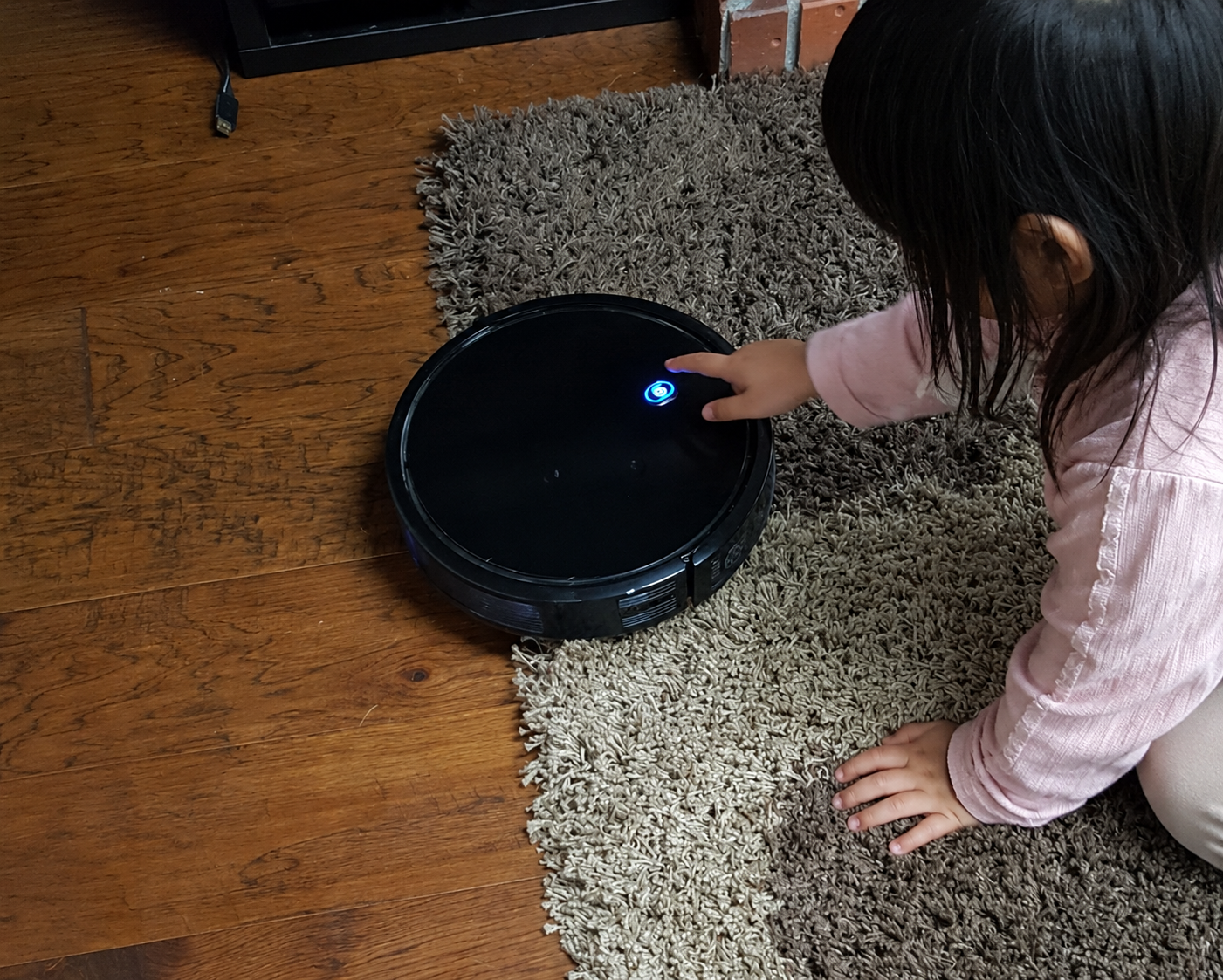
The eufy E25 wins this category not because of its 20,000Pa suction, but because of its mopping system. On hardwood, the HydroJet roller is the single most important piece of hardware on this machine.
Why it wins on hardwood:
The HydroJet system applies fresh water to a continuously rotating roller, scrubs the floor with 10 Newtons of downward pressure, then physically wrings the dirty water into a separate sealed tank 120 times per minute. The roller surface touching your hardwood is always clean. There is no cross-contamination between rooms.
This is the mechanical opposite of a spinning pad system. A spinning pad robot mops your kitchen floor, absorbs grease and food residue into its pads, then carries that residue into your dining room and living room. By the time the robot reaches your hardwood entryway, it is essentially finger-painting diluted dirt across the wood.
The 10.8mm mop lift on carpet transitions is also critical for mixed-flooring households. When the E25 senses an area rug, it lifts the wet roller 10.8mm vertically before crossing the boundary. This prevents the wet mop from depositing water onto the rug edge, which is the #1 cause of cupped boards at carpet transitions.
The compromise: The Omni Station is large (17 inches tall, nearly 40 pounds) and only supports 2.4GHz Wi-Fi. If your home uses a modern mesh router, you will need to temporarily separate your network bands during initial setup.
For the full mechanical analysis, read our eufy E25 review.
[🛒 Check eufy Robot Vacuum E25 on Amazon →] (affiliate link)
2. Roborock Qrevo Series — Best Value for Hardwood
If your budget caps at around $400 and your home is predominantly hardwood, the Roborock Qrevo is the most rational purchase on the market. It does not match the eufy E25’s continuous-clean mop architecture, but it does not need to. On hardwood, its 8,000Pa suction and 200RPM spinning mops are mechanically sufficient.
Why it works for hardwood:
The all-rubber main brush is gentle on wood. Unlike traditional bristle brushes that can scuff softer hardwood species over time, solid TPU rubber vanes glide across the surface without abrasion.
The dual spinning mops rotate at 200 RPM, generating enough friction to remove dried coffee spills, milk drips, and tracked-in grit. For daily maintenance cleaning on hardwood, this scrubbing action is more effective than a static drag mop.
The 10mm mop lift on carpet transitions protects rugs and carpet edges from water exposure.
The compromise: The dock uses ambient (unheated) air to dry the mop pads. In hardwood households where the robot mostly mops dry surfaces, this is acceptable. But if your robot regularly mops up biological messes (pet accidents, food spills with grease), the cold air drying can lead to mildew odor within two weeks. Place the dock in a well-ventilated room.
The Qrevo is also limited on multi-story homes. Its battery struggles to clean both floors of a 2,500+ sq ft home on a single charge.
For the full breakdown, see our Roborock Qrevo review. For broader budget context across the entire sub-$500 category, see our [best robot vacuum under $500 guide]
[🛒 Check Roborock Qrevo Series on Amazon →] (https://www.amazon.com/eufy-HydroJet-Cleaning-Zero-Tangle-Avoidance/dp/B0FK2HPNCB?th=1&linkCode=ll2&tag=zhwei26-20&linkId=b75305398205668b165fbf1809ff800e&language=en_US&ref_=as_li_ss_tl)
3. Roborock Qrevo CurvX — Best Premium for Hardwood
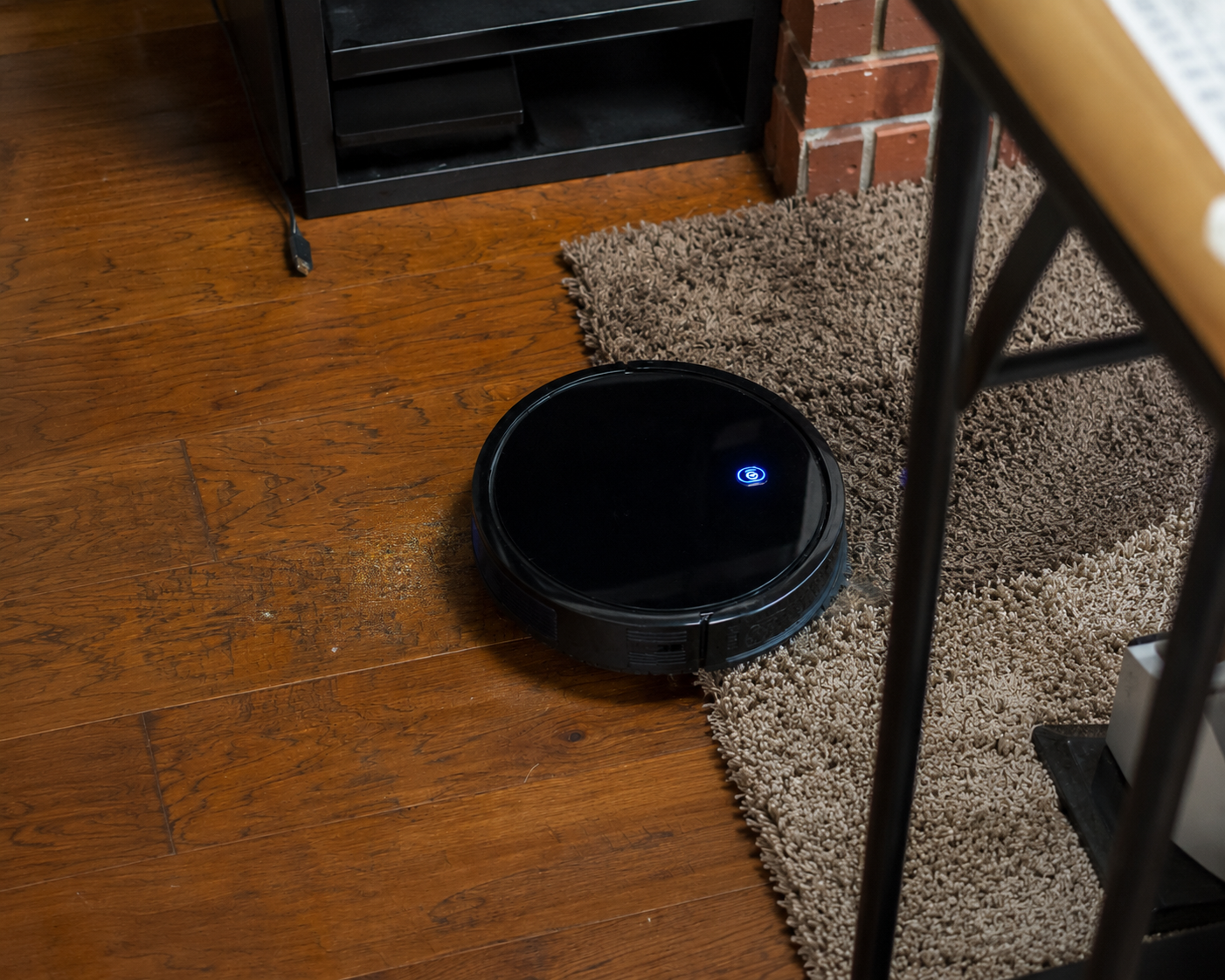
If budget is not a primary constraint and you want the most thorough hardwood cleaning available in 2026, the Roborock Qrevo CurvX at $899 introduces hardware that genuinely changes what is possible on wood floors.
Why it justifies the premium on hardwood:
The dock uses 176°F (80°C) hot water sprayed through 20 high-temp nozzles to wash the mop pads between cycles. This temperature physically dissolves the lipid residues left by cooking oils, hand prints near light switches, and the invisible biological film that builds up on hardwood in high-traffic areas.
Cold water mopping cannot remove these residues. It just smears them around. Hot water mopping breaks them down chemically. The visible difference on hardwood after one full hot-water cycle is significant — the floor reflects light more cleanly, and walking barefoot does not produce the slight tackiness that residue buildup causes.
The 12N maximum downward mopping pressure combined with 200RPM spinning action is the most aggressive scrubbing system available on a consumer robot. For households with kids tracking in juice spills, dogs leaving paw prints, or any sticky residue on hardwood, this is the only machine that will fully remove it on a single pass.
The AdaptiLift chassis lifts up to 4cm to cross thresholds and double-layer transitions. This eliminates the most common reason robot vacuums fail in older homes with raised door saddles between hardwood rooms.
The Dual Zero-Tangle main brush (SGS certified) ensures that long hair from pets or family members never wraps around the brush axle. On hardwood, where hair is highly visible, this matters more than on carpet.
The compromise: $899 is a significant investment. If your hardwood is in a small apartment or single room, you do not need this much hardware.
For the full feature breakdown, read our Roborock Qrevo CurvX review.
[🛒 Check Roborock Qrevo CurvX on Amazon →] (affiliate link)
Hardwood-Specific Comparison Matrix
To compare the three picks on the metrics that specifically matter for wood floors:
| Hardwood Performance Metric | eufy E25 | Roborock Qrevo | Roborock Qrevo CurvX |
|---|---|---|---|
| Price | $649 | $399 | $899 |
| Mop Architecture | Continuous Roller | Dual Spinning Pads | Dual Spinning Pads |
| Mop Wash Temperature | Cold (warm air dry) | Cold (cold air dry) | 176°F Hot Water |
| Wastewater Extraction | Real-time (120/min) | Dock-only | Dock-only |
| Carpet Transition Lift | 10.8mm | 10mm | Variable (up to 4cm) |
| Brush Material | Asymmetrical Hybrid | All-Rubber | Dual Zero-Tangle |
| Suction (Hardwood Sufficiency) | 20,000 Pa (overkill) | 8,000 Pa (ideal) | 22,000 Pa (overkill) |
| Streak Prevention | Excellent | Good | Excellent |
| Residue Dissolution | Moderate | Moderate | Excellent (hot water) |
| Best for Hardwood Type | Mixed flooring | Apartments, small homes | Large homes, kids/pets |
The three machines occupy distinct positions. The eufy E25 prevents streaks through mechanical wastewater extraction. The Qrevo provides essential hardwood automation at the lowest price point that still delivers professional-grade hardware. The Qrevo CurvX uses thermal energy to address residues that cold-water systems physically cannot remove.
Hardwood Floor Care: Critical Settings to Configure
Buying the right machine is only step one. The default settings on every robot vacuum are calibrated for mixed flooring, not optimized for hardwood. Three configuration adjustments significantly improve performance and protect your floors.
Adjust Water Flow to “Low” or “Minimum”
The default mopping water flow on most robot vacuums is set to “Medium.” On hardwood, this is too much water. Excess moisture sits on the wood surface, seeps into the gaps between boards, and over months can cause cupping (where the edges of boards lift higher than the center).
Open the manufacturer’s app and reduce water flow to the lowest setting. The mop will still clean effectively because spinning friction and scrubbing pressure do most of the work. The water just dissolves residue. You do not need a wet floor — you need a damp floor.
Disable Mop Mode in Sealed-Wood Areas
If you have unfinished hardwood, hand-scraped wood, or older floors with worn polyurethane sealant, disable mop mode entirely in those zones using the app’s room boundaries feature. Vacuum-only cleaning is safe; wet mopping on unsealed wood is not.
This is not a paranoid recommendation. Water penetration into unsealed wood causes irreversible darkening and can lift the finish. Use the robot’s mapping system to draw “no-mop zones” over any wood section where you are unsure of the seal status.
Schedule Daily Vacuum-Only Runs, Twice-Weekly Mop Runs
Hardwood does not need daily mopping. It needs daily debris removal. Mopping wood every day exposes it to far more moisture than necessary, and the cumulative water exposure shortens the life of the polyurethane finish.
A better protocol: schedule the robot to vacuum daily, but only mop on Tuesday and Friday (or whichever two days fit your routine). This is enough to maintain a clean, residue-free surface without over-saturating the wood.
What About Hardwood + Area Rugs?
Most hardwood homes have area rugs in living rooms, bedrooms, and entryways. The interaction between robot vacuum and rug edge is the single most overlooked failure point in hardwood households.
A robot that does not lift its mop fast enough will deposit water onto the rug at the transition point. Over months, this creates a visible damp stripe at every rug edge — the wood swells slightly, the rug edge molds, and the carpet fibers darken from absorbed mop water.
All three of our recommended machines lift the mop on carpet detection. But the response time and lift height differ:
- eufy E25: 10.8mm lift, ultrasonic carpet sensor (fastest detection)
- Roborock Qrevo: 10mm lift, ultrasonic carpet sensor
- Roborock Qrevo CurvX: AdaptiLift chassis (most aggressive lift, full chassis adjustment)
If your home has many small area rugs with thin profiles (under 1cm thick), the Qrevo CurvX’s AdaptiLift system handles the transitions most reliably. If you have one or two large rugs with thicker pile, all three machines work fine.
For more on multi-floor and multi-rug homes, see our Mid-to-Premium Robot Mop Hardware Data Report.
Common Hardwood-Owner Questions
Will a robot vacuum scratch my hardwood floors?
Quality robot vacuums from established manufacturers (eufy, Roborock, Dreame, iRobot) use rubberized wheels and rubber-vaned brushes specifically to prevent scratching. The three machines recommended above will not scratch sealed hardwood. The risk increases with cheap, white-label robots from unknown brands using hard plastic wheels.
The bigger risk is debris caught between the wheel and the floor. Small grit (sand, kitty litter, dried mud) trapped under a wheel can score the finish even on a high-quality robot. The solution is twofold: vacuum the floor manually before the first robot run to remove embedded grit, and check the wheels weekly for trapped debris.
Can robot mops actually clean hardwood as well as a manual mop?
For daily and routine cleaning, yes — and arguably better, because they run more frequently. A human manually mops once a week. A robot mops three times a week. The cumulative cleanliness is higher.
For deep cleaning (annual restoration, post-renovation cleanup, removing built-up wax), no. You still need a manual deep clean once or twice a year.
Is hot water mopping safe on hardwood?
Yes, when applied correctly. The Roborock Qrevo CurvX heats water to 176°F inside the dock, but by the time the water reaches the mop pad and contacts your floor, it has cooled to approximately 110-130°F. This is well below the temperature that would damage polyurethane finish (around 200°F+). The hot water dissolves residue without thermal damage to the wood.
What about steam mopping?
Steam mops (separate appliances, not robot mops) generate temperatures of 200-250°F at the nozzle. These can damage hardwood finish over repeated use and should not be used on most engineered or finished hardwood. Robot mops do not generate steam — they use warm water and friction. This is a critical distinction.
Final Verdict: Match the Machine to Your Hardwood
The “best” robot vacuum for hardwood is not a single answer. It depends on your home size, your budget, and what kinds of messes hit your floors.
Buy the eufy E25 ($649) if your home has mixed flooring (hardwood plus carpet/rugs) and you want the most reliable streak-free mopping available. The HydroJet continuous-clean architecture is mechanically superior to spinning pads for streak prevention. This is our default recommendation for most hardwood owners.
Buy the Roborock Qrevo ($399) if your home is mostly small to medium hardwood (under 2,000 sq ft), your messes are mostly dust and dry debris, and you want professional-grade automation at the lowest reasonable price. You give up real-time wastewater extraction and hot-water mopping, but for routine maintenance on hardwood, the Qrevo is mechanically sufficient. For more sub-$500 alternatives and which budget machines to avoid, see our [best robot vacuum under $500 guide].
Buy the Roborock Qrevo CurvX ($899) if you have a large home, kids or pets that produce sticky messes on hardwood, multiple thresholds and floor transitions, and the budget for the most thorough hardwood cleaning available. The 176°F hot water mopping is the only feature on the market that fully dissolves cooking residue and biological film on wood.
For broader category context, see our complete best robot vacuum and mop rankings. For hardwood-specific issues like pet hair management, see our pet hair buying guide.
The hardware is finally good enough to maintain hardwood floors automatically. The question is which machine fits your home.
Prices verified weekly. Affiliate links marked rel="sponsored" — commission earned at no extra cost to you, never affecting our editorial rankings.